
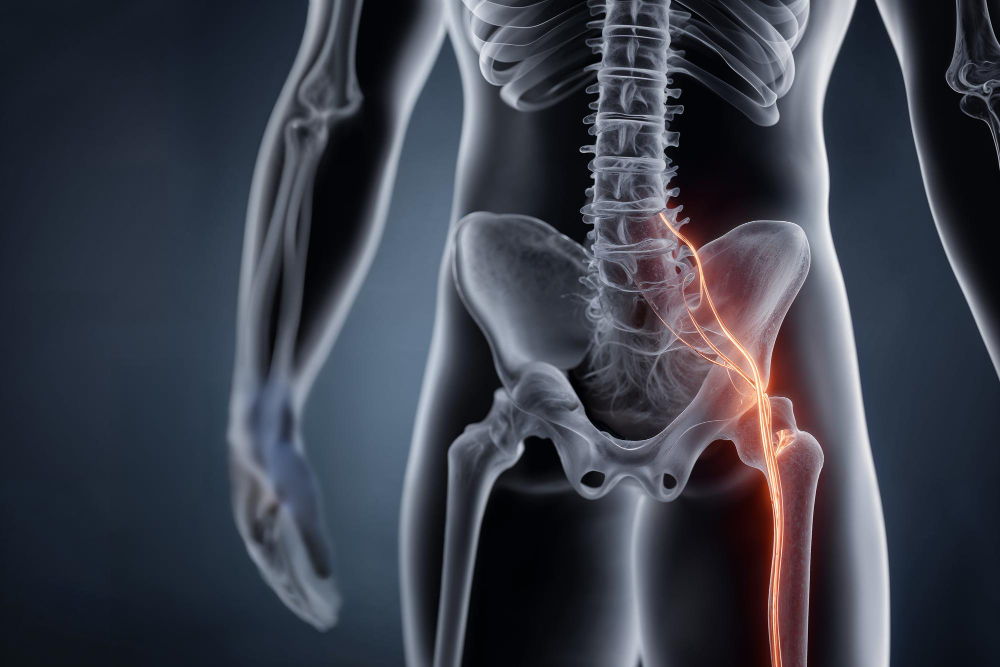
What is Sciatica?
Sciatica is a condition that causes pain along the sciatic nerve. This nerve runs from your lower back down each leg. Often, sciatica pain starts in the lower back and travels through the buttock and down the leg. Many people feel sharp, burning, or shooting pain. Sometimes, numbness or tingling can also occur. Sciatica is common and can affect people of all ages, but it is more frequent in adults.
Common Symptoms of Sciatica
People with sciatica may notice several symptoms. For example, pain is usually felt on one side of the body. However, the pain can range from mild to severe. In addition, you may notice:
Because these symptoms can affect daily life, it is important to seek help if they do not improve.
Causes and Risk Factors
Sciatica happens when something presses on or irritates the sciatic nerve. Most often, a herniated disc in the spine is the cause. However, other reasons include:
Some people are more likely to develop sciatica. For instance, risk factors include:
Knowing these causes and risks can help you take steps to prevent sciatica.
How Sciatica is Diagnosed
Doctors use several methods to diagnose sciatica. First, they ask about your symptoms and medical history. Next, a physical exam checks your strength, reflexes, and pain areas. Sometimes, imaging tests are needed. For example, an MRI or CT scan can show if a disc is pressing on the nerve. X-rays may also help rule out other problems. Early diagnosis helps guide the best treatment plan.
Treatment Options for Sciatica
There are many ways to find sciatica pain relief. Most people get better with simple treatments. However, some may need more advanced care. Common treatment options include:
In rare cases, surgery may be needed if pain does not improve or if there is weakness. Orthopedic surgeons can help decide if surgery is right for you. According to the CDC, most people recover without surgery.
Lifestyle Tips and Home Care
Many people can manage mild sciatica at home. For example, you can:
Because these steps can help reduce pain, they are a good place to start. However, always talk to your doctor before starting new exercises.
Prevention Strategies
While not all cases can be prevented, some habits lower your risk. For instance:
Because prevention is easier than treatment, these steps are important for everyone.
When to See an Orthopedic Specialist
Most cases of sciatica improve within a few weeks. However, you should see an orthopedic specialist if:
Early treatment can prevent long-term problems. Therefore, do not wait if your symptoms are serious.
In summary, sciatica can cause pain and limit daily activities. However, many people find relief with simple treatments and lifestyle changes. Consult an orthopedic specialist for personalized advice on sciatica.